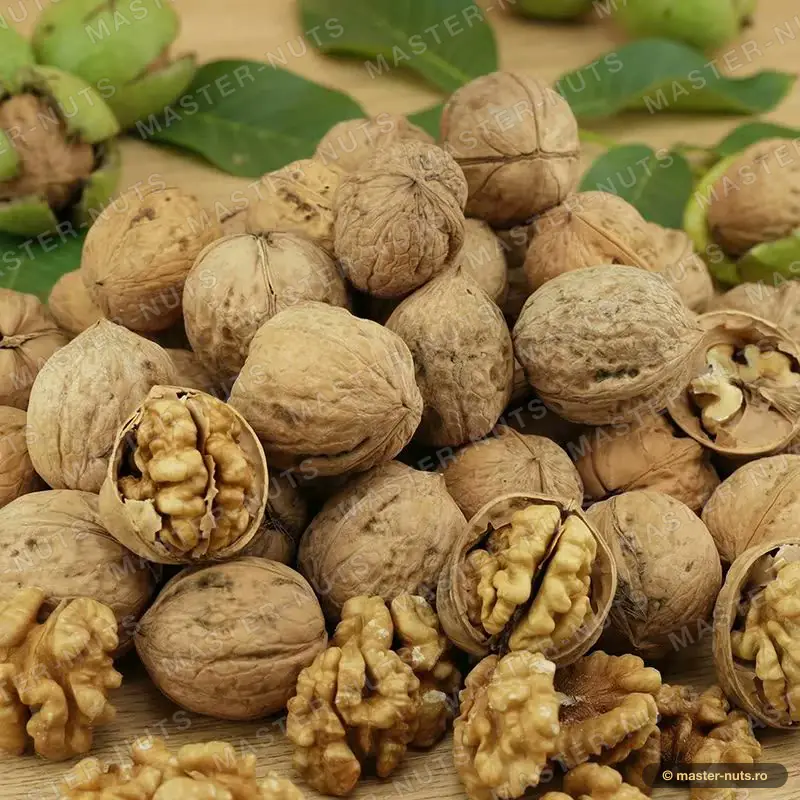
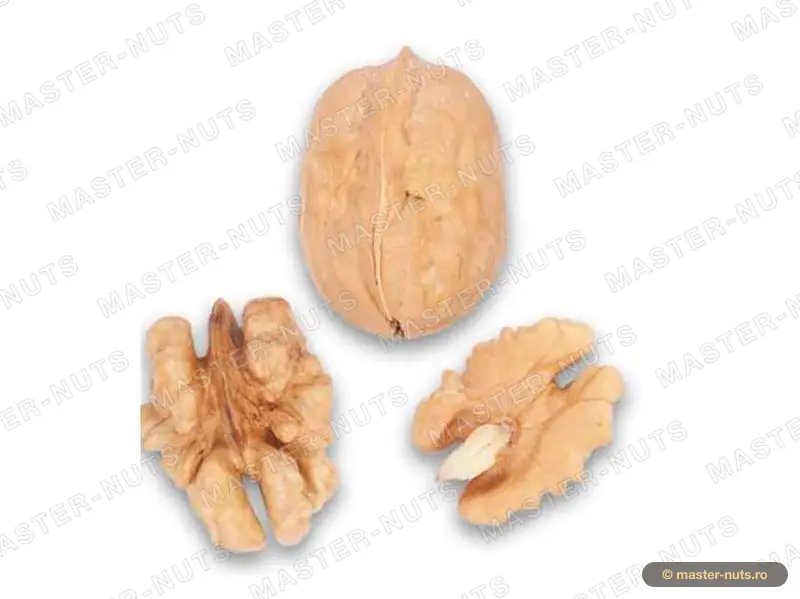
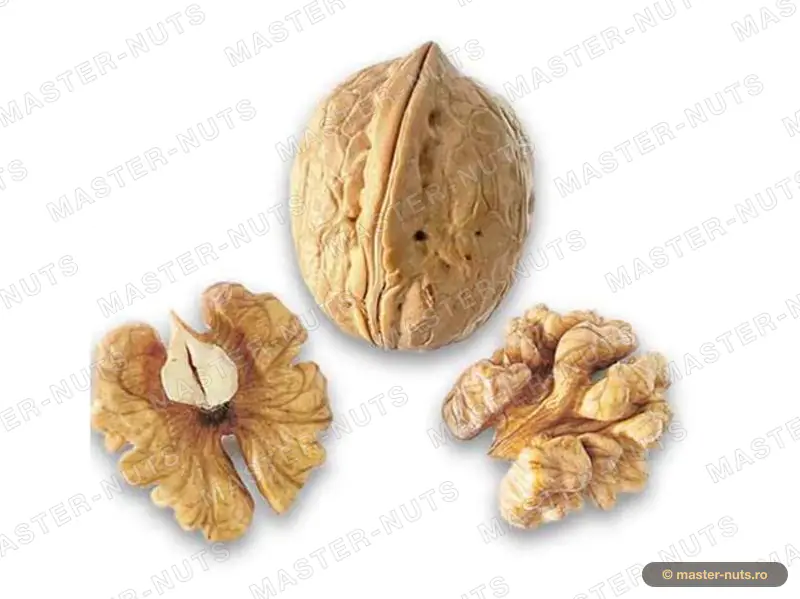
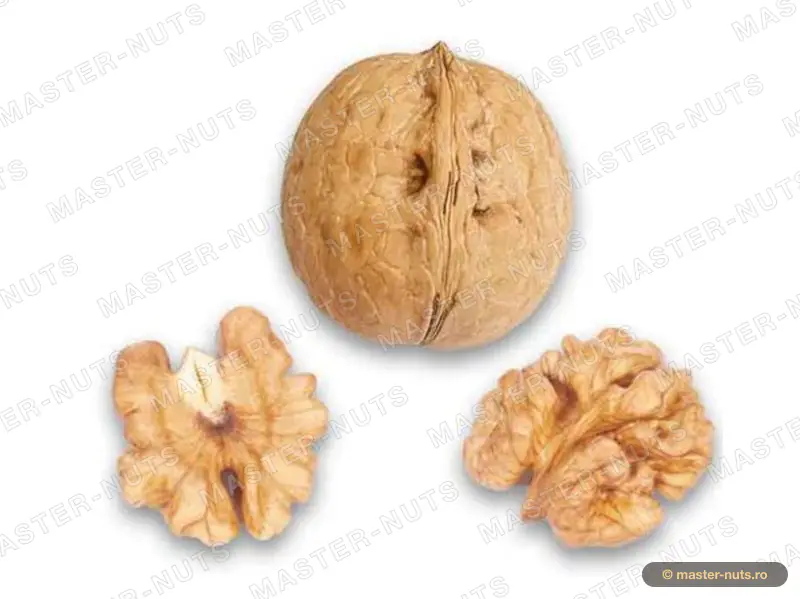
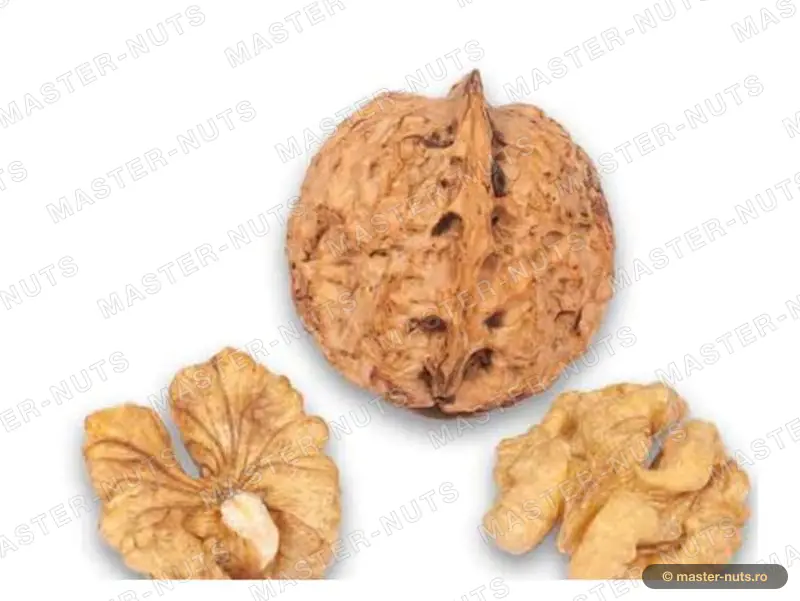
Named after Wensu county in the Aksu area of the Uyghur Region, the 185 walnut (also known as Wen 185) grows at around 40° N. It was selected from the region’s local walnut populations and quickly became China’s best-known paper-shell walnut.
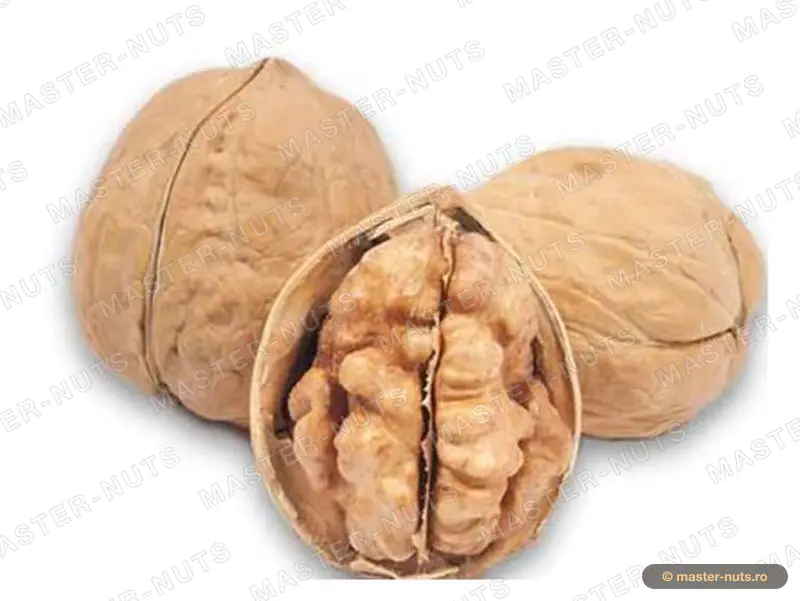
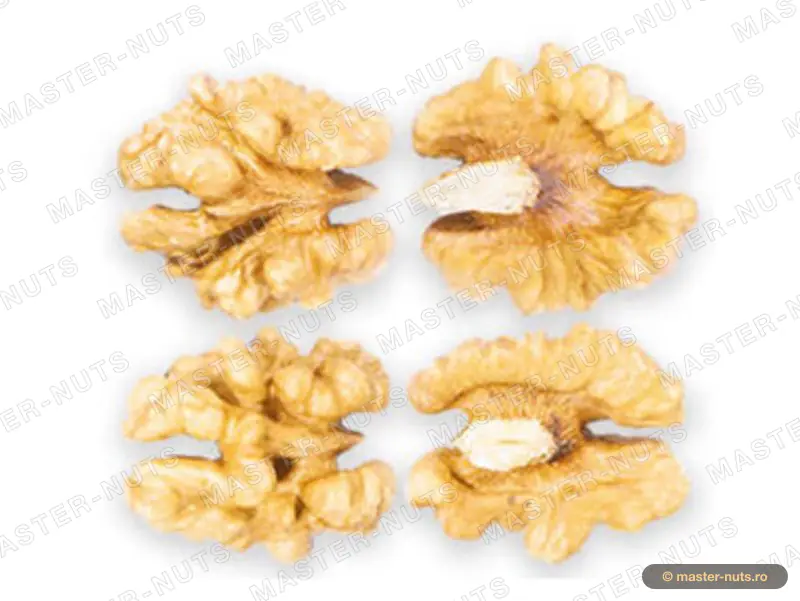
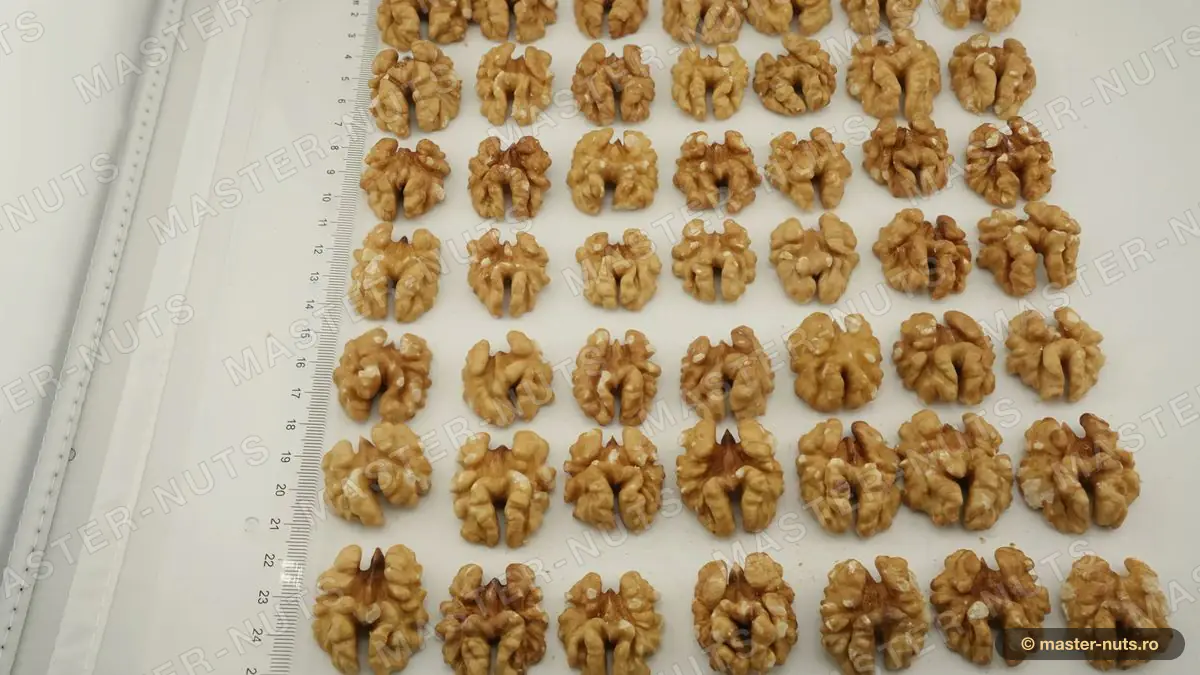
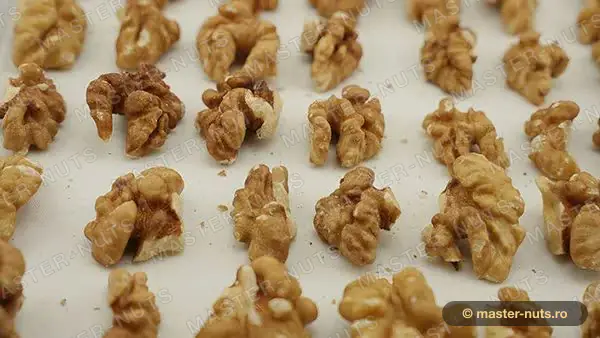
At about 0.6–0.8 mm the shell is so thin that two walnuts can be cracked by squeezing them in your palm. The inner partitions (septa) are thin too, so the kernel separates cleanly and more than 85 % comes out whole (butterfly). The pellicle is low in tannin, giving a creamy, sweet taste with no bitterness. Its high kernel ratio and light kernel colour make 185 the first choice both for in-shell retail and premium kernel production.
The thin shell has a price: it is more sensitive to knocks in transport and storage. Fast calibration after drying, the right moisture level and well-filled packaging are therefore important, and machine cracking uses a low-pressure setting to keep the halves whole. For comparison, well-known varieties such as Chandler and Howard typically have a kernel ratio of 48–52 %. Lots sold as “185 thin shell” that do not reach paper-shell grade come in around 51–53 %, so it is important to specify the grade when requesting a quote.